Nearly 78% of leisure travelers across twenty major markets now say a genuine local encounter is a primary reason they plan a trip at all, according to a 2025 industry survey (up from 61% in 2020). The fastest way to feel like you actually went somewhere, instead of just visiting it, is disarmingly simple: talk to someone who lives there.
Meeting locals when you travel comes down to a few habits: ask people instead of lists, eat where the menu has no photos, leave room for detours, learn a few words badly, and stay with someone rather than near them. None of it requires a guided tour. It requires noticing that the person next to you usually knows more than the internet does.
A conversation beats a guidebook because it updates in real time and a guidebook does not. Guidebooks describe a place from the outside. A local describes it from the inside, and the difference shows up in everything: which street has the good bread, which festival nobody puts on a poster, which corner of the market is worth the walk. Oxford Economics found that 72% of travelers now say they would rather spend their trip budget on local activities than on traditional sightseeing. The shift is not really about money. It is about wanting the version of a place a local would show a friend, not the version built for a brochure.
Real encounters are messy and human, and they rarely fit a five-star rating.
You meet locals by putting yourself in ordinary situations and staying long enough to talk, not by booking an activity labeled “authentic.” None of the five habits below require an app built around ratings. They require a small amount of nerve, and a willingness to leave twenty minutes of a day unplanned.
Solo sightseeing shows you a place; meeting a local lets a place show itself to you. Neither is wrong, but they answer different questions, and most trips end up needing both.
| Solo sightseeing | Meeting a local |
|---|---|
| You choose what to see from a list | Someone who lives there chooses what to show you |
| Fixed schedule, fixed stops | Open-ended, follows the conversation |
| You leave with photos | You leave with a story and, often, a contact |
| Repeatable by anyone with the same list | Specific to that day, that person, that city |
It is safe in proportion to how much structure sits behind the meeting, not to how the meeting happens to feel in the moment. Meeting locals casually, in public, on your own instinct, carries the same ordinary judgment calls as meeting anyone new while traveling. Doing it through a structured community, where people are identity-verified and everyone can read a reference from previous encounters, removes most of the guesswork. The mechanism matters as much as the intention.
Badly, and often. Ten mispronounced words plus a genuine smile gets you further than most travelers expect. Translation apps close the rest of the gap for anything more detailed.
A guide is paid to show you their city. A local is simply living in theirs, and has decided, for an afternoon or an evening, to let a stranger see it too. The second version is rarely on a schedule, and that is exactly the point.
No, not in the sense of reserving a fixed slot ahead of time. Some of the best encounters happen with no notice at all. Structured communities simply make it easier to find someone willing, in the right city, at the right time.
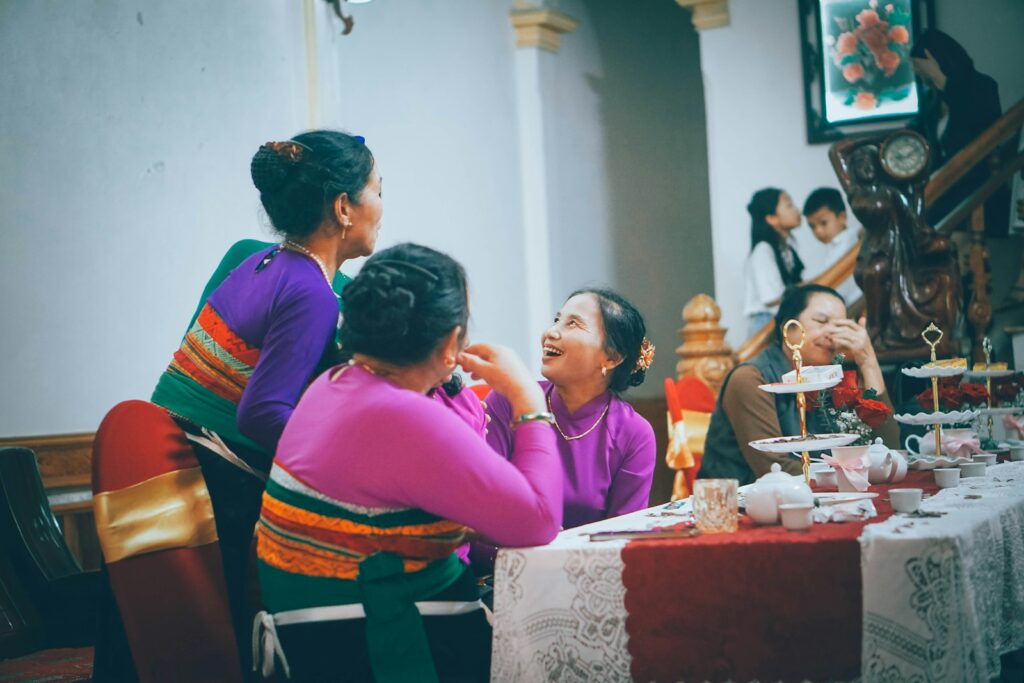
None of this needs a guided tour or a checklist of “authentic” experiences. It needs a way to actually find someone open to it, in the city you are already headed to. Terroo (terroo.world) connects travelers and locals, and locals with each other, for exactly this kind of encounter: a shared meal, a walk through a neighbourhood, an evening that was not on any itinerary. It stays a free, non-transactional exchange between two people who decided to spend part of a day together.
Last updated: September 16, 2026