A 2018 Pew Research Center survey found that only 31% of Americans know all or most of their neighbours, while 57% know only some of them. Many of us share a wall, a staircase, or a street with people whose names we have never learned. Getting to know the people around you takes small, repeated gestures, not grand ones.
The easiest way to get to know your neighbours is through small, repeated contact: say hello and learn their name, ask a simple question about the area, trade small favours, and show up in shared places like markets, parks, and building events. Suggesting one concrete next step, such as a coffee or a walk, turns familiarity into friendship.
Most people do not know their neighbours because modern routines rarely put them in the same place at the same time, not because they do not want to. We commute out, order in, and move more often than previous generations did. Many natural meeting points, like the corner shop, the shared courtyard, or the front step, have faded or moved online. A few common reasons:
None of these are permanent. Each one gives way to a small, deliberate first step.
Start with a question about the place you share, because it is easy to answer and gives the other person a chance to help. Asking for a local recommendation feels natural, even after years of polite silence. Some openers that work:
Use their name the next time you see them. Remembering a name is the fastest way to move from stranger to neighbour.
Relationships between neighbours grow through small exchanges of help and time, so offer something concrete and let it repeat. Friendships tend to form through regular, low-pressure contact far more than through any single big gesture. Some ways to create that rhythm:
Not every neighbour will become a friend, and that is fine. Knowing a handful of people by name already makes a street feel safer and warmer.
Being new is the best moment to introduce yourself, because everyone expects it and nobody finds it strange. Use the first few weeks while the excuse is fresh. Knock on the doors on either side and across the hall, say who you are, and ask one question about the area. Then go where local life already happens: the weekly market, the same café at the same time each morning, a class at the community centre, a volunteering shift nearby. Regular presence is what turns a new face into a familiar one. If your building feels quiet, look a little wider: many cities are full of people happy to show a newcomer their corner of it, over a meal, a walk around the block, or a language exchange.
Not really, and most people are relieved when someone finally does it. A simple “I realised we have never properly met” usually gets a warm response.
Nothing is required, but a small food gift or a note with your name and number makes the moment easier. Keep it simple so it feels friendly rather than formal.
Use the shared spaces: the lobby, the lift, the laundry room, or the courtyard. Suggesting a building group chat or a small gathering in a common area gives everyone an easy way to connect.
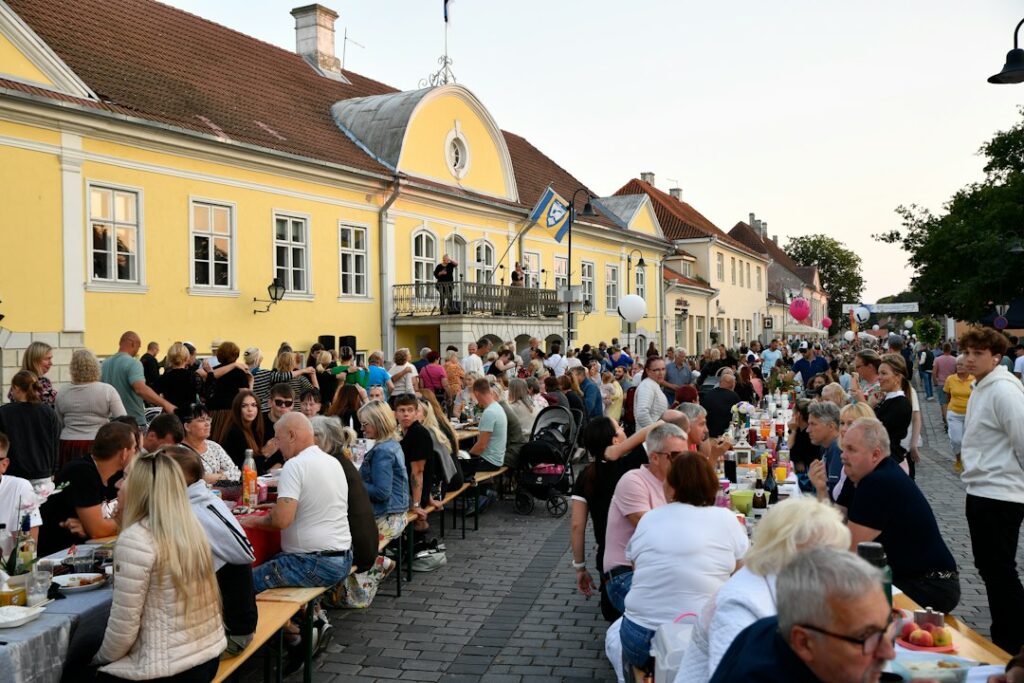
Knowing your neighbours rarely starts with a big gesture; it starts with a name, a question, and a second hello. The same curiosity works beyond your own street, too. Terroo (terroo.world) is a community where locals, newcomers, and travelers meet for a shared meal, a walk through a neighbourhood, or a language exchange: a free, non-transactional way to discover the people and places around you. Sometimes the quickest way to feel at home is simply to meet the person next door.
Last updated: September 25, 2026
A 2023 Meta-Gallup survey across 142 countries found that roughly 24% of people worldwide feel very or fairly lonely. Solo travel can amplify that feeling: new streets, no familiar faces, and long evenings with nobody to tell about your day. Loneliness on the road is usually a problem of structure, not personality, and structure is something you can change.
Loneliness when traveling solo is common and usually temporary. The most reliable fixes are structural: stay somewhere with shared spaces, join small recurring activities, eat at communal tables, and arrange at least one real encounter with a local early in the trip. Slowing down, staying longer in fewer places, makes connections far more likely to form.
Solo travel removes the small, repeated contact that normally keeps loneliness away, and crowds of strangers do not replace it. At home, connection comes from routine: the same café, the neighbour on the stairs, a colleague who asks about your weekend. On the road, every interaction resets to zero. You talk to a receptionist, a waiter, a ticket seller, and none of those exchanges carry over to the next day. Loneliness tends to peak at predictable moments:
Knowing when it tends to hit makes it easier to plan something for exactly those moments.
The easiest places to meet people are the ones built around a shared activity, because the activity does half the talking for you. Walking up to strangers cold works for very few people. A shared context lowers the stakes for everyone. Some reliable options:
That last option often changes a trip the most, because it gives you one person who knows the city and genuinely cares how your stay is going.
Ask about something you can both see, or ask for a recommendation: people enjoy being the expert on their own place. Questions like “What would you order here?” or “Is this market always this busy?” are easy to answer and easy to follow up. A few habits help:
That last step is the one most solo travelers skip, and it is the difference between a pleasant chat and an actual connection.
Yes: feeling lonely on a trip you chose and looked forward to is common, and it does not mean the trip was a mistake. Travel strips away routine, language, and familiar faces all at once, and the mind notices the absence. The feeling usually eases once you have one or two recurring points of contact. Slowing down helps too. A week in one neighbourhood, rather than two nights in each of four cities, gives relationships time to form: the baker starts recognising you, the person from the workshop invites you to something else. The same thing happens close to home, to people who have just moved to a new city or who have lived somewhere for years without really knowing their neighbours, and the same remedies apply.
Not at all, and it is increasingly common. Sitting at the bar or a communal table makes it easy to chat if you want to, and a book or journal makes it comfortable if you do not.
Join activities where locals already are, like language exchanges, classes, or neighbourhood events, or arrange to share a meal or a walk with someone who lives there. A shared activity makes the first conversation much easier.
For most people it comes in waves rather than lasting the whole trip. It tends to ease within a few days, once you have a routine and one or two people you see again.

Loneliness on the road rarely fades by accident; it fades when you give connection a structure, a place, and a second meeting. Terroo (terroo.world) is one concrete way to do that: a community where travelers, expats, and locals meet for a shared meal, a walk through a neighbourhood, or a language exchange, a free, non-transactional encounter between people who are simply curious about each other. One real conversation early in a trip can change how the rest of it feels.
Last updated: September 23, 2026
[STAT TO VERIFY] on how many travelers say they feel obligated to pay or tip someone who helps them without being asked. Anyone who has had a local walk them through their own city, unprompted and unpaid, knows the feeling anyway: a small panic about how to say thank you properly. The instinct is generous. It is usually aimed at the wrong gesture.
Cash is rarely the right way to thank a local who shows you around for free. A better instinct is reciprocity: a genuine thank-you, a small gift, covering a coffee or a meal in the moment, or simply staying present and curious. Money can turn a personal exchange into a transaction neither person actually wanted.
Most people are wired to reciprocate, and a free favor from a stranger triggers that instinct even when nothing was asked in return. Researchers call it the norm of reciprocity: across cultures, people feel an unconscious debt after receiving a gift, a meal, or a favor, and reaching for a wallet is usually the fastest way anyone knows to cancel that debt. The trouble is that a spontaneous, personal gesture, someone giving up an afternoon because they genuinely want to share their city, is not the same as a paid tour. Treating it like one can make the other person feel like their generosity just got reduced to a service they forgot to charge for.
This is exactly the tension Terroo is built around: two people meeting for a genuine, non-transactional exchange, not a transaction with a number attached to it.
The best alternatives to cash are small, personal, and reciprocal: something the other person could not simply have bought for themselves. A short list of gestures that tend to land well:
Read the reaction to a first, small, reversible gesture before attempting anything bigger. Offer to cover the coffee, not a lump sum. Watch how it lands. If it is waved off cheerfully, that is usually a real answer, not politeness, and pressing further can tip into making the other person repeat a refusal they already gave. In some cultures, declining an offer once or twice is itself a ritual, an expected step before a genuine yes, so a second gentle offer is not necessarily pushy. If someone insists on paying for you instead, the most gracious response is often to simply let them, and find another way to reciprocate later, a message, a small gift, a return invitation, rather than turning the moment into a standoff over a bill.
The core idea stays the same in both directions: reciprocity, not payment. A traveler being shown around a new city and a local meeting another local in their own neighbourhood are really facing the same question, just from opposite sides. If you are the one showing someone your own city, decline a cash offer as you would from anyone, and if it feels natural, say plainly that the company was already enough. If you are the one being shown around, whether you flew in from another country or simply moved across town, the same ideas apply regardless of who lives where.
It can come across that way, since it reframes a personal gesture as a paid service. A better first move is offering to cover something small in the moment, like a coffee or a shared meal.
Let them. Insisting past a clear, cheerful refusal usually makes the moment more awkward, not less. Reciprocate later instead, with a message, a small gift, or the same welcome if they ever visit your city.
It’s a thoughtful habit, not a requirement. Something small and specific to where you’re from, rather than anything generic or expensive, tends to mean more than what it’s worth.

None of this requires a script, just attention to how the other person actually responds. Terroo (terroo.world) exists for exactly this kind of encounter: travelers and locals, or locals with each other, meeting for a shared meal, a walk through a neighbourhood, or a conversation with nothing being sold on either side. The gesture that matters most is rarely the one that costs anything.
Last updated: September 22, 2026
According to the U.S. Department of State, over 70% of expats experience reverse culture shock: the disorientation of returning to a place that is supposed to feel like home and suddenly does not. Coming back is supposed to be the easy part of the journey. For many people who have spent real time living abroad, it turns out to be harder than the original move ever was.
Reverse culture shock is the disorientation of returning home after living abroad, and it affects most expats. It fades faster when you name it early, stay in touch with people from your host country, and rebuild local connections instead of waiting for old routines to feel familiar again on their own.
Reverse culture shock hits harder because nobody prepares you for it. Before you move abroad, every guidebook, every friend, and every orientation session warns you that culture shock is coming, so you brace for it. Nobody gives you that same warning about the return, so when your hometown suddenly feels foreign, the confusion lands twice as hard, and it often gets dismissed by people around you who assume you should just be relieved to be back.
For most returning expats, the adjustment takes three to twelve months. The U.S. Department of State’s research on re-entry found that more than half of returnees needed at least that long before daily life started to feel normal again. Rushing it, or pretending you are fine when you are not, tends to stretch the timeline out rather than shorten it.
| Culture shock abroad | Reverse culture shock at home | |
|---|---|---|
| What you expect | Difficulty and a learning curve | Comfort and familiarity |
| What you get | Difficulty and a learning curve | Difficulty and a learning curve |
| Support available | Guides, orientations, fellow newcomers | Little to none, often assumed unnecessary |
| Typical duration | Weeks to a few months | Three to twelve months |
The fastest way through it is staying connected to the person you became abroad while actively building new local ties at home. Trying to slot back into your old life unchanged is usually what stretches the adjustment out the longest.
Yes. It is a well-documented part of the expat and study-abroad experience, studied by researchers and government agencies including the U.S. Department of State, and it follows a recognizable pattern of disorientation, frustration, and gradual readjustment.
It can, though it is usually milder and shorter. The intensity tends to track how deeply your daily life adapted to the new place, not just how many weeks were on the calendar.
Homesickness is missing a place while you are away from it. Reverse culture shock is closer to the opposite: missing a life you have already left, while standing in the place you used to call home.

Reverse culture shock eases fastest when the parts of you that changed abroad still have somewhere to go. That is really what Terroo is for: a free way to meet locals and travelers, wherever you are, for a genuine meal, a walk, or a language exchange. Whether you are newly home or you never left, terroo.world is a way to keep those in-person, cross-culture encounters part of ordinary life, not something that only happens when you travel.
Last updated: September 18, 2026
73% of global travelers now say they’re seeking more authentic, local experiences to fully immerse themselves in a culture, according to Hilton’s 2025 Travel Trends Report. Most trips still run on the same script anyway: landmarks, star ratings, a schedule built for efficiency instead of connection. The instinct itself isn’t new, it usually stalls on two questions: who do you actually talk to, and how do you find them without a business card or a paid tour attached. Traveling like a local isn’t a longer itinerary, it’s a different one entirely.
Traveling like a local means trading landmark-chasing for time with people who actually live somewhere: eating where they eat, moving at their pace, following one honest conversation instead of ten reviews. It takes less planning than a packed itinerary, just a willingness to ask, wander, and stay a little longer in one place.
A tourist consumes a place; someone traveling like a local spends time inside it. The difference rarely shows up in passport stamps. It shows up in the small choices along the way: where you eat, how fast you move, who you end up talking to.
None of these markers require a plane ticket to notice. They’re just easier to see once you’re away from home, where every small choice suddenly feels visible again. Noticing the difference is the easy part; acting on it is where a trip actually changes shape.
The people most willing to share their daily life with a stranger are rarely the ones working in tourism. They’re neighbours, retirees, students, people who picked up a hobby they’re proud of. Finding them usually looks like putting yourself somewhere ordinary and staying long enough to talk.
None of this needs to feel performative. The goal isn’t collecting a story to tell later, it’s leaving enough space in a day for an actual person to wander into it. Most of these encounters start smaller than expected: a nod, a question, an offer to sit down.
Slow down to the speed of the place, not the speed of your itinerary. Most of what makes a trip feel local is subtraction, not addition: fewer stops, more time at each one.
None of these steps are complicated. What they require is releasing the instinct to see as much as possible, in favour of seeing one place well.
They answer different questions, and most good trips end up needing a bit of both.
| Classic sightseeing trip | Locally-anchored trip |
|---|---|
| Built around a list of sights | Built around people and time |
| Fixed schedule, fixed stops | Open-ended, follows the day |
| Recommendations from review sites | Recommendations from someone who lives there |
| Same experience for every visitor | Specific to that person, that city, that day |
| You leave with photos | You leave with a story, sometimes a contact |
Most travelers don’t have to choose only one. A trip built around even a single locally-anchored afternoon tends to be the one people remember years later, long after the landmark photos blur together, and it costs nothing extra to plan for.
Not really. A translation app and ten badly pronounced words cover most everyday moments, and people who choose to spend time with a stranger are usually patient about the gap, since most of them have crossed the same gap themselves at some point.
No. See them if you want to, just don’t build the whole trip around them. A morning at a landmark and an evening with someone who actually lives nearby cover very different ground, and most travelers end up glad they did both.
Less than a packed itinerary, not more. It mostly takes leaving unplanned time and being willing to ask. One real conversation can reorganise an entire day for the better, in a way no amount of pre-trip research can replicate.

None of this requires a guided tour or a checklist of “authentic” experiences, just a way to actually find someone open to sharing part of their day. Terroo (terroo.world) connects travelers and locals, and locals with each other, for exactly this kind of exchange: a shared meal, a walk through a neighbourhood, an afternoon that wasn’t on any itinerary. It stays a free, non-transactional way for two people to decide, on their own terms, to spend part of a day together.
Last updated: September 16, 2026
[STAT TO VERIFY] on how many people who start learning a language with an app ever hold a real conversation in it. Anyone who has tried can guess why: an app is very good at teaching you to recognize a word on a flashcard, and much worse at preparing you to produce that same word out loud, under pressure, in front of a stranger who is waiting for an answer. The fix isn’t a better app. It’s a real conversation.
Language apps build recognition, not the reflex of speaking under pressure. Real progress comes from talking with an actual person: a language exchange partner, a local meetup, or a shared meal where both languages get used. Split time evenly between languages, meet more than once, and let mistakes pass uncorrected mid-sentence. That repetition is what apps cannot give you.
Language apps plateau because they train recognition, not the split-second retrieval a real conversation demands. Matching exercises, multiple choice, word banks: the app is quietly doing half the work of every sentence for you, and it never once puts you in a position where you have to find a word on your own, in real time, because someone is standing in front of you waiting. That is the exact skill a conversation requires and the exact skill a screen cannot train. Learners often describe reaching a point where they can read a menu or follow a podcast but freeze the moment a real person asks them a simple question back. The app didn’t fail; it was just never built to teach that part.
You find real conversation partners by going to where language swapping already happens, instead of waiting for an app to match you with one. A few starting points that work in most cities:
The common thread is that none of these depend on the other person being a certified teacher. They depend on someone willing to talk, and willing to be talked to badly for the first ten minutes.
An app is enough to build vocabulary, but only a real conversation partner builds the reflex of using it. The two are not competing; they solve different problems, and most people who reach real fluency end up needing both.
| App-only practice | Talking with a real person | |
|---|---|---|
| Feedback speed | Delayed, automated | Immediate, human |
| What it trains | Recognition, spelling, patterns | Retrieval, listening under pressure |
| Realistic ceiling | Early intermediate | Real conversational fluency |
A language exchange works when both people commit to speaking the harder language for equal time, not when one person quietly takes over because it’s easier. A few habits separate the exchanges that actually help from the ones that fizzle after one coffee:
Not fluent at all. A handful of phrases is enough to start, and the exchange itself is what builds the rest. Waiting for confidence usually just delays the conversation that would have built it.
The first few minutes usually are, for both people. Most language exchange partners are there for exactly the same reason you are, so the awkwardness tends to fade once the actual conversation starts.
Yes. Most cities already have local speakers of dozens of languages who are open to an exchange over a coffee or a shared meal, no plane ticket required.

None of this requires enrolling in an expensive program or waiting for a trip abroad. Terroo (terroo.world) connects locals and travelers, and locals with each other, for exactly this kind of exchange: two people meeting to trade languages over a coffee or a shared meal, free and with nothing transactional about it. It’s often the fastest way to turn an app’s vocabulary into a conversation you can actually hold.
Last updated: September 16, 2026
A 2025 Global Rescue travel survey found that only 51% of women who travel solo say they usually feel safe doing so, compared with 74% of men, and the gap widens sharply the moment a stranger enters the picture. Meeting someone new in an unfamiliar city can feel like the best part of a trip or the riskiest one, often within the same conversation. The difference rarely comes down to luck. It comes down to a handful of checks most people never think to run before saying yes.
Meeting a local you matched with online is safe when you verify who they are before meeting, read how past encounters with them went, keep the first conversation and first meeting public, and tell someone else your plan. None of this requires suspecting the person, only a habit of checking the structure around the meeting itself.
The risk rarely comes from the person themselves, it comes from the absence of anything that would hold them accountable if the meeting went wrong. A stranger met through a mutual friend, a workplace, or a verified community carries a kind of built-in accountability: there is a name, a record, a way to trace back what happened. A stranger met with none of that context carries none of the accountability either, and that gap is where real risk lives, far more than in the person’s intentions.
A few things tend to raise the risk level specifically:
None of these guarantee anything will go wrong. But each one removes a check that would otherwise catch a problem early.
You vet someone the same way you would vet any new contact: check that their identity is confirmed, read what people who met them before have to say, and talk enough beforehand that meeting in person is not the first real conversation.
In practice, that looks like:
None of this needs to feel like an interrogation. Most genuine locals expect these questions and answer them without hesitation, because they are doing the same checks on you.
The first meeting should happen somewhere public, during the day if possible, with someone else aware of where you are and who you are with.
A few habits make this easy to stick to:
A good first meeting is short by design. It exists to confirm that the conversation you already had online holds up in person, not to fill an entire afternoon.
A spontaneous encounter and a structured one can both go well, but only one of them gives you anything to check beforehand.
| Spontaneous encounter | Structured community |
|---|---|
| Identity unconfirmed | Identity verified |
| No record of past meetings | References from past encounters |
| First real conversation happens in person | Messages exchanged before meeting |
| Nothing to refer back to afterward | Mutual reviews after the encounter |
Neither approach removes ordinary judgment from the equation, and a spontaneous conversation with a shopkeeper or a bartender is still one of the best parts of travel. The difference matters most for meetings arranged in advance with someone you do not yet know, where a bit of structure costs nothing and removes most of the guesswork.
Yes, and that nervousness is useful information, not something to push past. If it does not ease once you have verified who they are and set a public first meeting, it is worth listening to.
Any excuse works, and you do not owe a detailed explanation. Something as simple as another plan coming up is enough, and a person acting in good faith will not push back on it.
Either can work. Meeting alone is common and generally fine once you have verified the person, but there is nothing wrong with bringing a friend along, especially for a first meeting.

None of this is really about suspicion, it is about giving a good encounter the best chance to happen safely. Terroo (terroo.world) builds exactly that structure in from the start: identity verification, honest references from past encounters, and a community where travelers and locals, or two locals discovering the same neighbourhood from different sides, can meet with far less guesswork than a chance encounter usually allows.
Nearly 78% of leisure travelers across twenty major markets now say a genuine local encounter is a primary reason they plan a trip at all, according to a 2025 industry survey (up from 61% in 2020). The fastest way to feel like you actually went somewhere, instead of just visiting it, is disarmingly simple: talk to someone who lives there.
Meeting locals when you travel comes down to a few habits: ask people instead of lists, eat where the menu has no photos, leave room for detours, learn a few words badly, and stay with someone rather than near them. None of it requires a guided tour. It requires noticing that the person next to you usually knows more than the internet does.
A conversation beats a guidebook because it updates in real time and a guidebook does not. Guidebooks describe a place from the outside. A local describes it from the inside, and the difference shows up in everything: which street has the good bread, which festival nobody puts on a poster, which corner of the market is worth the walk. Oxford Economics found that 72% of travelers now say they would rather spend their trip budget on local activities than on traditional sightseeing. The shift is not really about money. It is about wanting the version of a place a local would show a friend, not the version built for a brochure.
Real encounters are messy and human, and they rarely fit a five-star rating.
You meet locals by putting yourself in ordinary situations and staying long enough to talk, not by booking an activity labeled “authentic.” None of the five habits below require an app built around ratings. They require a small amount of nerve, and a willingness to leave twenty minutes of a day unplanned.
Solo sightseeing shows you a place; meeting a local lets a place show itself to you. Neither is wrong, but they answer different questions, and most trips end up needing both.
| Solo sightseeing | Meeting a local |
|---|---|
| You choose what to see from a list | Someone who lives there chooses what to show you |
| Fixed schedule, fixed stops | Open-ended, follows the conversation |
| You leave with photos | You leave with a story and, often, a contact |
| Repeatable by anyone with the same list | Specific to that day, that person, that city |
It is safe in proportion to how much structure sits behind the meeting, not to how the meeting happens to feel in the moment. Meeting locals casually, in public, on your own instinct, carries the same ordinary judgment calls as meeting anyone new while traveling. Doing it through a structured community, where people are identity-verified and everyone can read a reference from previous encounters, removes most of the guesswork. The mechanism matters as much as the intention.
Badly, and often. Ten mispronounced words plus a genuine smile gets you further than most travelers expect. Translation apps close the rest of the gap for anything more detailed.
A guide is paid to show you their city. A local is simply living in theirs, and has decided, for an afternoon or an evening, to let a stranger see it too. The second version is rarely on a schedule, and that is exactly the point.
No, not in the sense of reserving a fixed slot ahead of time. Some of the best encounters happen with no notice at all. Structured communities simply make it easier to find someone willing, in the right city, at the right time.
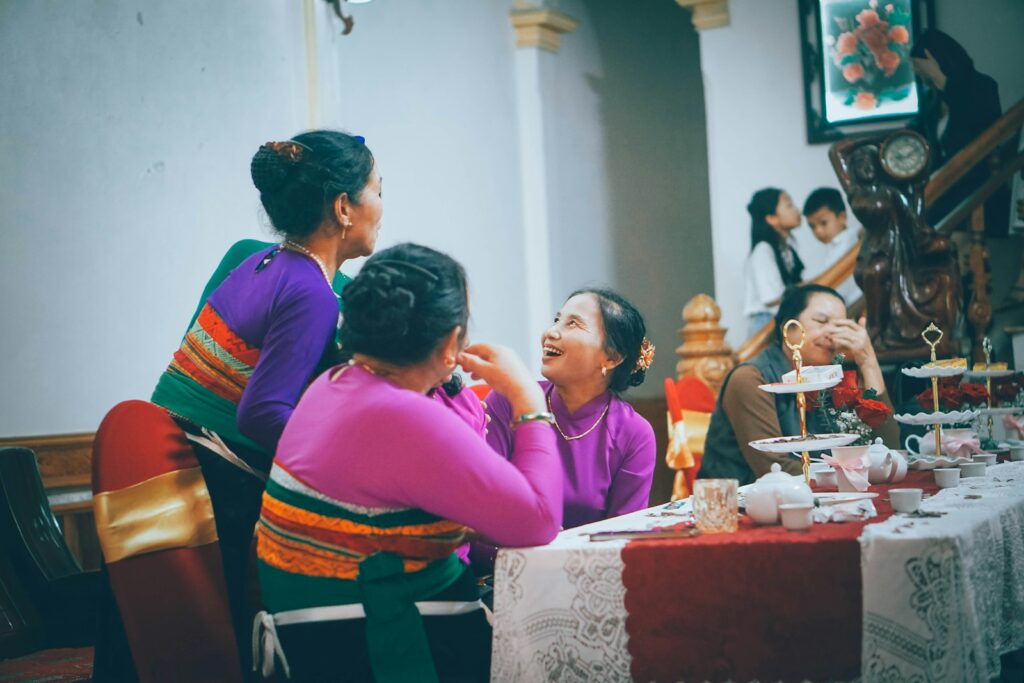
None of this needs a guided tour or a checklist of “authentic” experiences. It needs a way to actually find someone open to it, in the city you are already headed to. Terroo (terroo.world) connects travelers and locals, and locals with each other, for exactly this kind of encounter: a shared meal, a walk through a neighbourhood, an evening that was not on any itinerary. It stays a free, non-transactional exchange between two people who decided to spend part of a day together.
Last updated: September 16, 2026
A 2025 travel spending survey found that 82% of travelers now use deliberate cost-cutting strategies to keep a trip affordable, and more than a third choose hostels or shared homes over hotels to do it. The instinct that a cheaper trip has to be a smaller one is mostly wrong. Spending less on where you sleep is usually what makes room for the parts of a trip people actually remember.
Traveling on a budget means spending less on the parts of a trip that do not create memories (lodging, transport, pre-booked extras) and keeping the parts that do (food, time, people). Stay somewhere shared instead of a hotel, eat where locals eat, use regional transport instead of taxis, and leave slack in the schedule instead of pre-paying for every hour.
A hotel room is one of the few parts of a trip that rarely produces a story worth telling, so it is the easiest place to cut without losing anything. Money saved on a private room with a view goes further spent on a cooking class, a longer stay, or simply an extra week away. The 35% of travelers who now default to hostels or shared homes are not settling for less; they are redirecting the same budget toward the parts of the trip that actually leave an impression.
The trip you remember is rarely the room you slept in.
The reliable savings come from a handful of repeatable habits, not from a single clever hack. None of these require sacrificing what makes a trip good.
Yes, and the trade-offs are more favorable than most travelers assume. A strict budget forces choices that often produce a more textured trip, not a thinner one.
| Higher-spend trip | Tight-budget trip |
|---|---|
| Private hotel room, limited contact with residents | Shared stay, direct daily contact with locals |
| Pre-booked tours on a fixed schedule | Open days, room to follow a local recommendation |
| Taxis between sights | Public transport alongside people who live there |
| Fewer days, more spent per day | More days, more time to let a place unfold |
No. Entry fees to major sights are a small part of most trip budgets. The real savings come from lodging, food, and transport choices, which do not touch what you actually go to see.
It depends far more on the specific host or property than on the category. Reading recent guest feedback and looking for identity-verified hosts matters more than the price tag.
Pre-booking too much. Fixed tours and reserved daily plans remove the flexibility to take a good tip from someone local, which is usually where the best part of a trip comes from.

None of this requires giving anything up, just spending differently. A room that costs less because it is shared with a local, rather than rented alone in a hotel, tends to buy more of what a trip is actually for. Terroo (terroo.world) connects travelers with locals for exactly this kind of stay and encounter: a place to sleep that comes with a person who can point you one street over from the tourist menu, at no cost beyond the trip itself.
Last updated: September 16, 2026
A 2025 Making Caring Common survey found that 95% of adults say friends are essential to their well-being, yet one in three reports feeling lonely at least once a week. The gap between wanting connection and having it shows up hardest right after a move, when the people who used to fill a week are suddenly a time zone or a city away.
Making friends after a move works best through repetition, not effort: the same class, the same café, the same run club, week after week, until faces become names. Structured, recurring activities beat one-off events, and asking a neighbour or new colleague to do something specific and small works better than a general invitation to hang out.
Adult friendships mostly used to form through repeated, unplanned contact: school, dorms, a first job’s shared office. A move removes all three at once. Nothing replaces that structure automatically, so friendship stops being a byproduct of daily life and becomes something that has to be built on purpose, which feels unfamiliar and, at first, a little forced.
Proximity plus repetition is what built most adult friendships in the first place, not chemistry alone.
The habits that work are the ones that manufacture repeated contact with the same small group of people, on purpose. None of them require being naturally outgoing.
They are a reliable way to find the first contact, but the friendship itself still forms offline, through repetition. An app or local group is good for solving the “who” problem; it does nothing to solve the “how many times will we actually see each other” problem, which is the part that determines whether it becomes a real friendship.
Most people report the first real friendship forming somewhere between three and six months, once a recurring activity has produced enough repeated contact with the same people.
Yes. Liking a place and having a social life in it are separate things, and the second one lags behind the first almost every time.
Committing to one recurring activity for at least a month, rather than trying several one-off events. Repetition with the same small group is what does the actual work.

Most of this comes down to engineering repeated contact with people worth knowing, which is exactly what a recurring local encounter does. Terroo (terroo.world) connects people living in the same city, new arrivals and long-time locals alike, for a shared meal, a walk, or an evening with no other agenda than actually meeting someone.
Last updated: September 16, 2026