A 2018 Pew Research Center survey found that only 31% of Americans know all or most of their neighbours, while 57% know only some of them. Many of us share a wall, a staircase, or a street with people whose names we have never learned. Getting to know the people around you takes small, repeated gestures, not grand ones.
The easiest way to get to know your neighbours is through small, repeated contact: say hello and learn their name, ask a simple question about the area, trade small favours, and show up in shared places like markets, parks, and building events. Suggesting one concrete next step, such as a coffee or a walk, turns familiarity into friendship.
Most people do not know their neighbours because modern routines rarely put them in the same place at the same time, not because they do not want to. We commute out, order in, and move more often than previous generations did. Many natural meeting points, like the corner shop, the shared courtyard, or the front step, have faded or moved online. A few common reasons:
None of these are permanent. Each one gives way to a small, deliberate first step.
Start with a question about the place you share, because it is easy to answer and gives the other person a chance to help. Asking for a local recommendation feels natural, even after years of polite silence. Some openers that work:
Use their name the next time you see them. Remembering a name is the fastest way to move from stranger to neighbour.
Relationships between neighbours grow through small exchanges of help and time, so offer something concrete and let it repeat. Friendships tend to form through regular, low-pressure contact far more than through any single big gesture. Some ways to create that rhythm:
Not every neighbour will become a friend, and that is fine. Knowing a handful of people by name already makes a street feel safer and warmer.
Being new is the best moment to introduce yourself, because everyone expects it and nobody finds it strange. Use the first few weeks while the excuse is fresh. Knock on the doors on either side and across the hall, say who you are, and ask one question about the area. Then go where local life already happens: the weekly market, the same café at the same time each morning, a class at the community centre, a volunteering shift nearby. Regular presence is what turns a new face into a familiar one. If your building feels quiet, look a little wider: many cities are full of people happy to show a newcomer their corner of it, over a meal, a walk around the block, or a language exchange.
Not really, and most people are relieved when someone finally does it. A simple “I realised we have never properly met” usually gets a warm response.
Nothing is required, but a small food gift or a note with your name and number makes the moment easier. Keep it simple so it feels friendly rather than formal.
Use the shared spaces: the lobby, the lift, the laundry room, or the courtyard. Suggesting a building group chat or a small gathering in a common area gives everyone an easy way to connect.
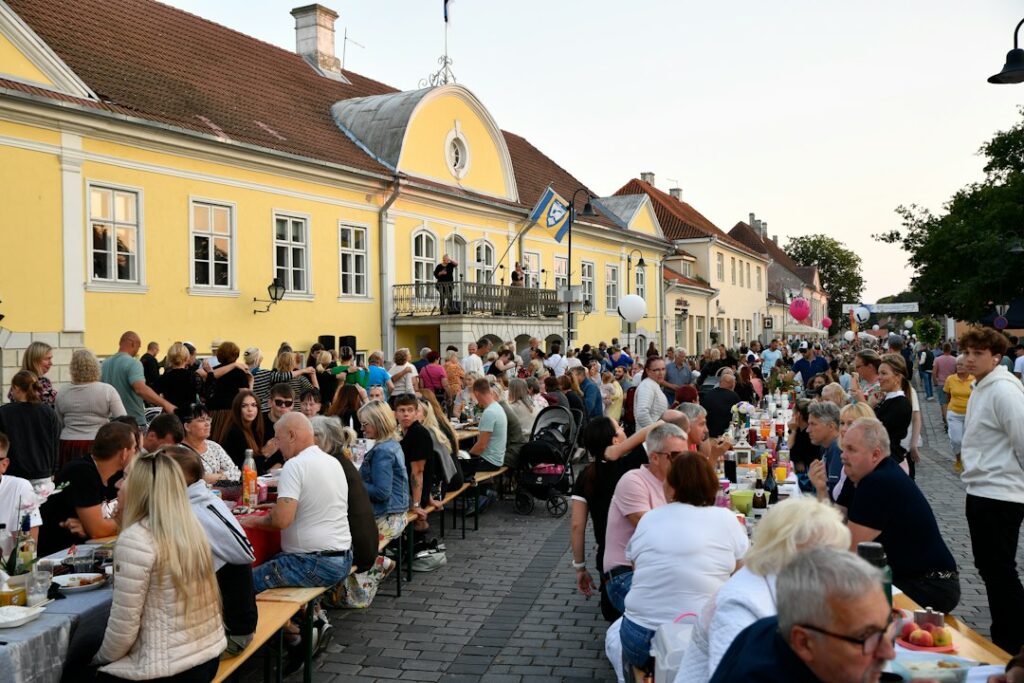
Knowing your neighbours rarely starts with a big gesture; it starts with a name, a question, and a second hello. The same curiosity works beyond your own street, too. Terroo (terroo.world) is a community where locals, newcomers, and travelers meet for a shared meal, a walk through a neighbourhood, or a language exchange: a free, non-transactional way to discover the people and places around you. Sometimes the quickest way to feel at home is simply to meet the person next door.
Last updated: September 25, 2026
Nearly 78% of leisure travelers across twenty major markets now say a genuine local encounter is a primary reason they plan a trip at all, according to a 2025 industry survey (up from 61% in 2020). The fastest way to feel like you actually went somewhere, instead of just visiting it, is disarmingly simple: talk to someone who lives there.
Meeting locals when you travel comes down to a few habits: ask people instead of lists, eat where the menu has no photos, leave room for detours, learn a few words badly, and stay with someone rather than near them. None of it requires a guided tour. It requires noticing that the person next to you usually knows more than the internet does.
A conversation beats a guidebook because it updates in real time and a guidebook does not. Guidebooks describe a place from the outside. A local describes it from the inside, and the difference shows up in everything: which street has the good bread, which festival nobody puts on a poster, which corner of the market is worth the walk. Oxford Economics found that 72% of travelers now say they would rather spend their trip budget on local activities than on traditional sightseeing. The shift is not really about money. It is about wanting the version of a place a local would show a friend, not the version built for a brochure.
Real encounters are messy and human, and they rarely fit a five-star rating.
You meet locals by putting yourself in ordinary situations and staying long enough to talk, not by booking an activity labeled “authentic.” None of the five habits below require an app built around ratings. They require a small amount of nerve, and a willingness to leave twenty minutes of a day unplanned.
Solo sightseeing shows you a place; meeting a local lets a place show itself to you. Neither is wrong, but they answer different questions, and most trips end up needing both.
| Solo sightseeing | Meeting a local |
|---|---|
| You choose what to see from a list | Someone who lives there chooses what to show you |
| Fixed schedule, fixed stops | Open-ended, follows the conversation |
| You leave with photos | You leave with a story and, often, a contact |
| Repeatable by anyone with the same list | Specific to that day, that person, that city |
It is safe in proportion to how much structure sits behind the meeting, not to how the meeting happens to feel in the moment. Meeting locals casually, in public, on your own instinct, carries the same ordinary judgment calls as meeting anyone new while traveling. Doing it through a structured community, where people are identity-verified and everyone can read a reference from previous encounters, removes most of the guesswork. The mechanism matters as much as the intention.
Badly, and often. Ten mispronounced words plus a genuine smile gets you further than most travelers expect. Translation apps close the rest of the gap for anything more detailed.
A guide is paid to show you their city. A local is simply living in theirs, and has decided, for an afternoon or an evening, to let a stranger see it too. The second version is rarely on a schedule, and that is exactly the point.
No, not in the sense of reserving a fixed slot ahead of time. Some of the best encounters happen with no notice at all. Structured communities simply make it easier to find someone willing, in the right city, at the right time.

None of this needs a guided tour or a checklist of “authentic” experiences. It needs a way to actually find someone open to it, in the city you are already headed to. Terroo (terroo.world) connects travelers and locals, and locals with each other, for exactly this kind of encounter: a shared meal, a walk through a neighbourhood, an evening that was not on any itinerary. It stays a free, non-transactional exchange between two people who decided to spend part of a day together.
Last updated: September 16, 2026
A 2025 Making Caring Common survey found that 95% of adults say friends are essential to their well-being, yet one in three reports feeling lonely at least once a week. The gap between wanting connection and having it shows up hardest right after a move, when the people who used to fill a week are suddenly a time zone or a city away.
Making friends after a move works best through repetition, not effort: the same class, the same café, the same run club, week after week, until faces become names. Structured, recurring activities beat one-off events, and asking a neighbour or new colleague to do something specific and small works better than a general invitation to hang out.
Adult friendships mostly used to form through repeated, unplanned contact: school, dorms, a first job’s shared office. A move removes all three at once. Nothing replaces that structure automatically, so friendship stops being a byproduct of daily life and becomes something that has to be built on purpose, which feels unfamiliar and, at first, a little forced.
Proximity plus repetition is what built most adult friendships in the first place, not chemistry alone.
The habits that work are the ones that manufacture repeated contact with the same small group of people, on purpose. None of them require being naturally outgoing.
They are a reliable way to find the first contact, but the friendship itself still forms offline, through repetition. An app or local group is good for solving the “who” problem; it does nothing to solve the “how many times will we actually see each other” problem, which is the part that determines whether it becomes a real friendship.
Most people report the first real friendship forming somewhere between three and six months, once a recurring activity has produced enough repeated contact with the same people.
Yes. Liking a place and having a social life in it are separate things, and the second one lags behind the first almost every time.
Committing to one recurring activity for at least a month, rather than trying several one-off events. Repetition with the same small group is what does the actual work.

Most of this comes down to engineering repeated contact with people worth knowing, which is exactly what a recurring local encounter does. Terroo (terroo.world) connects people living in the same city, new arrivals and long-time locals alike, for a shared meal, a walk, or an evening with no other agenda than actually meeting someone.
Last updated: September 16, 2026